
Grow fresh food year-round with AI-powered vertical farms
Annadhara AI Agri designs, builds, and operates indoor vertical farms that combine crop science, robotics, automation, machine learning, and precision climate control to grow fresh produce with far less water and land.

A new operating system for agriculture
We bring together engineering, data science, and crop science under one roof so that fresh, nutritious produce can be grown anywhere, any day of the year, with a fraction of the resources conventional farms demand.

Resource efficiency
Closed-loop hydroponic systems recycle water and nutrients, using up to 95% less water with no arable soil and no agricultural runoff.

Year-round production
Controlled indoor environments decouple growth from seasons and weather, delivering predictable weekly harvests through every climate cycle.

Space-optimised design
Vertical racks and dense planting layouts let compact facilities match the output of many acres of open farmland.
End-to-end vertical farming services
From the first architectural sketch to daily harvest operations, Annadhara covers every layer of a modern controlled-environment farm.
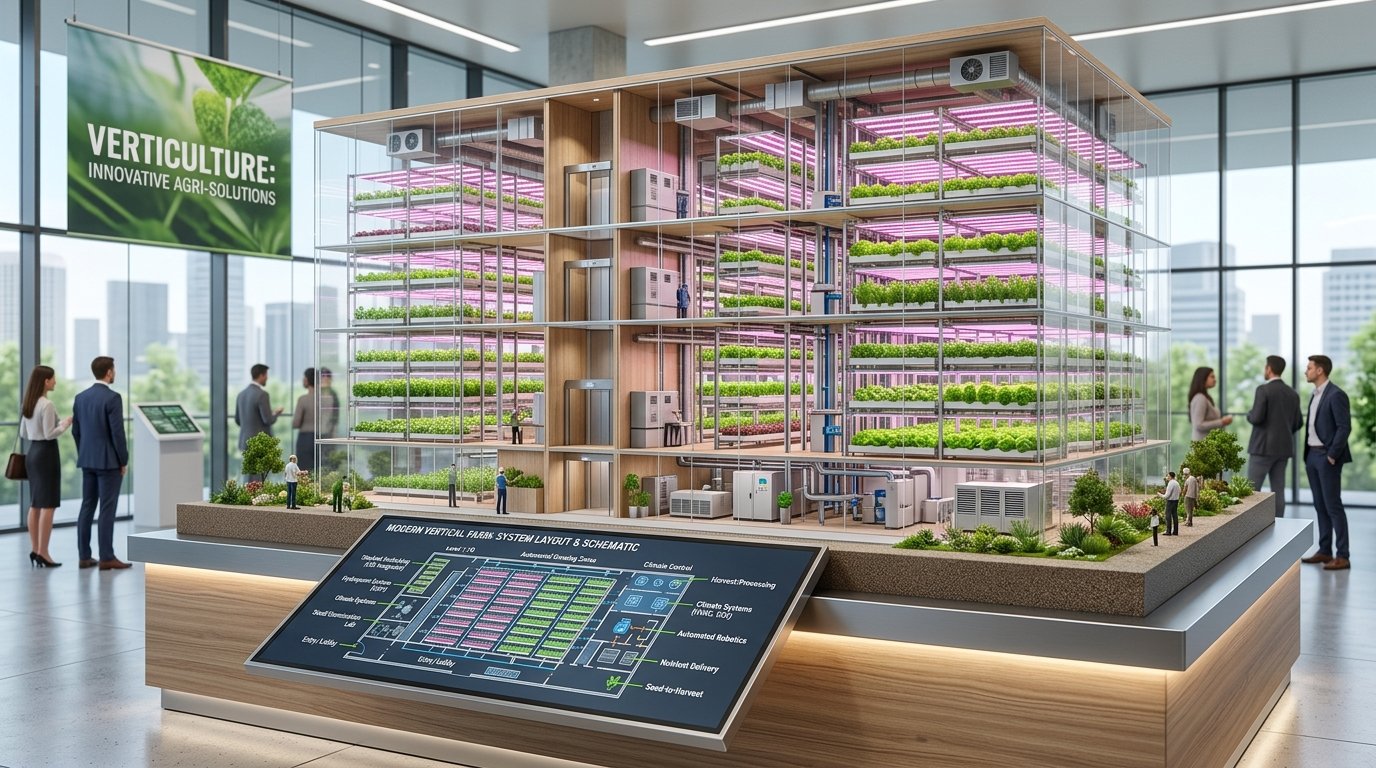
Vertical Farm Design
Facility architecture, racking systems, lighting layout, and hydraulics engineered for maximum density and efficiency.
Learn more →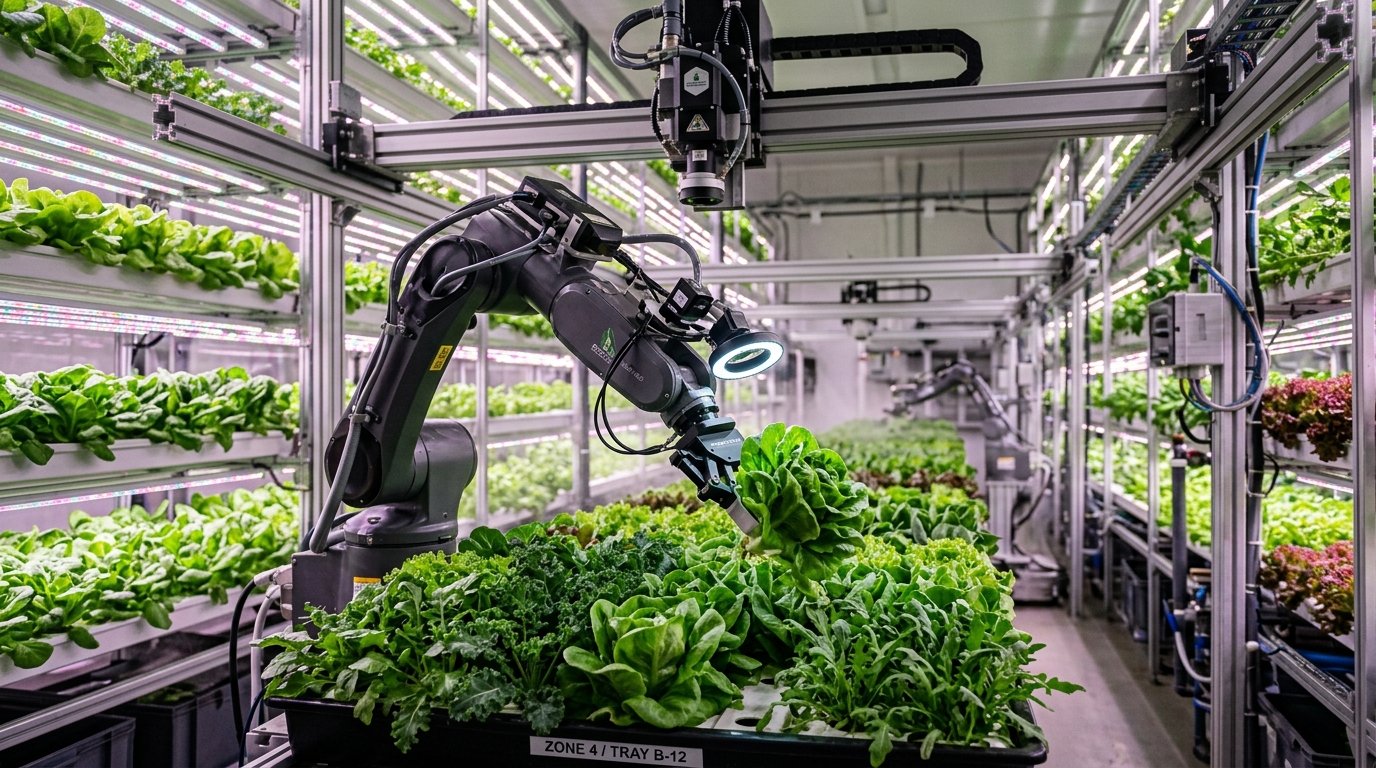
Robotics & Automation
Seeding, transplanting, monitoring, and harvesting robots that run around the clock with minimal human intervention.
Learn more →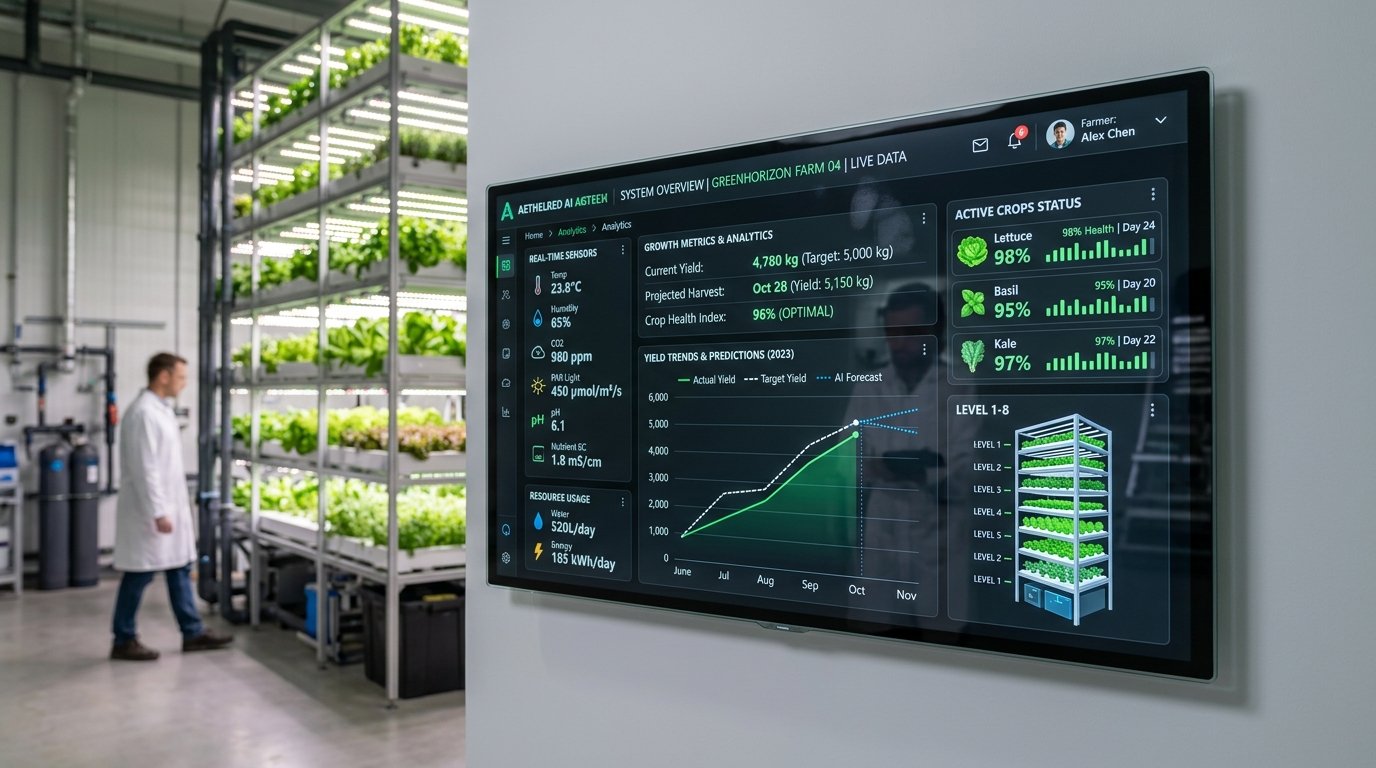
Machine Learning
Predictive models for yield, disease detection, and resource tuning that learn from every growth cycle.
Learn more →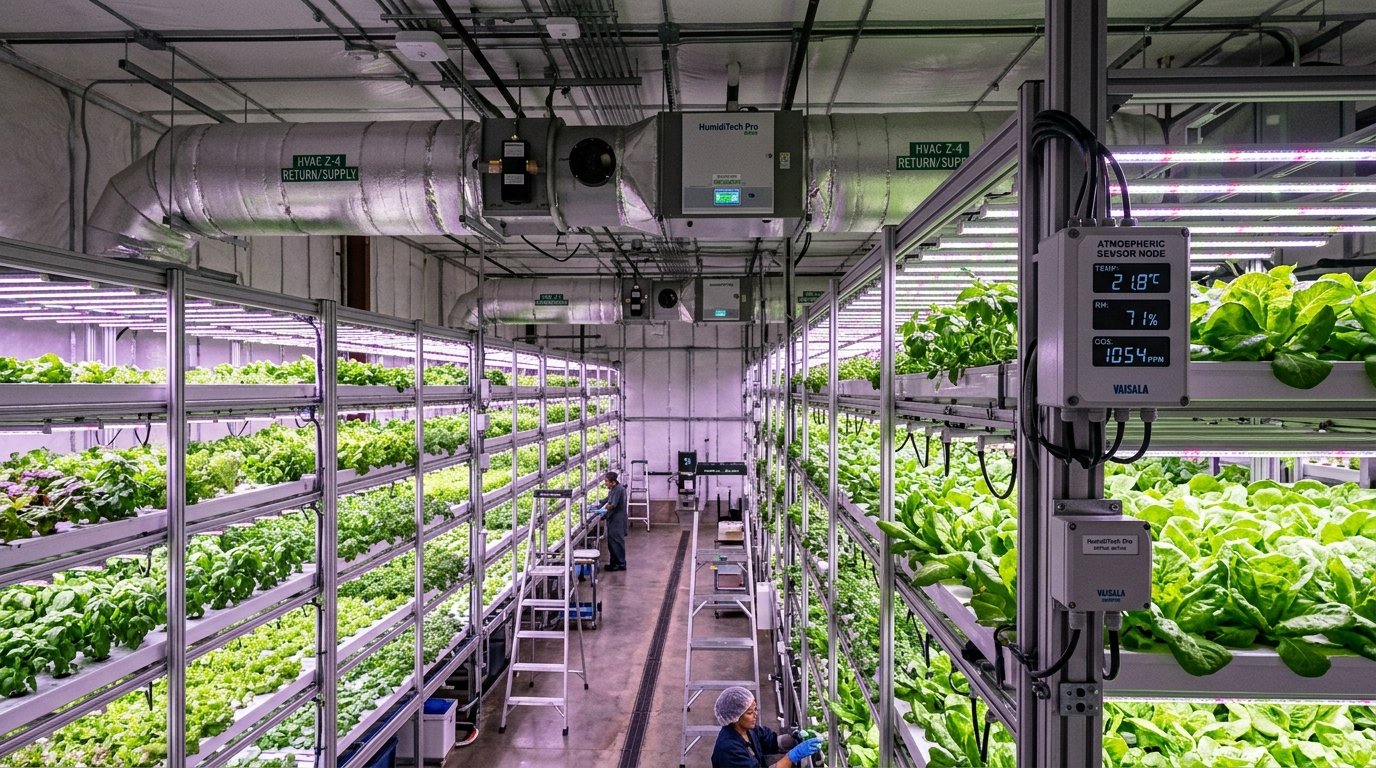
Environmental Controls
Sensor-driven regulation of light, temperature, humidity, CO₂, and airflow to keep crops in their ideal microclimate.
Learn more →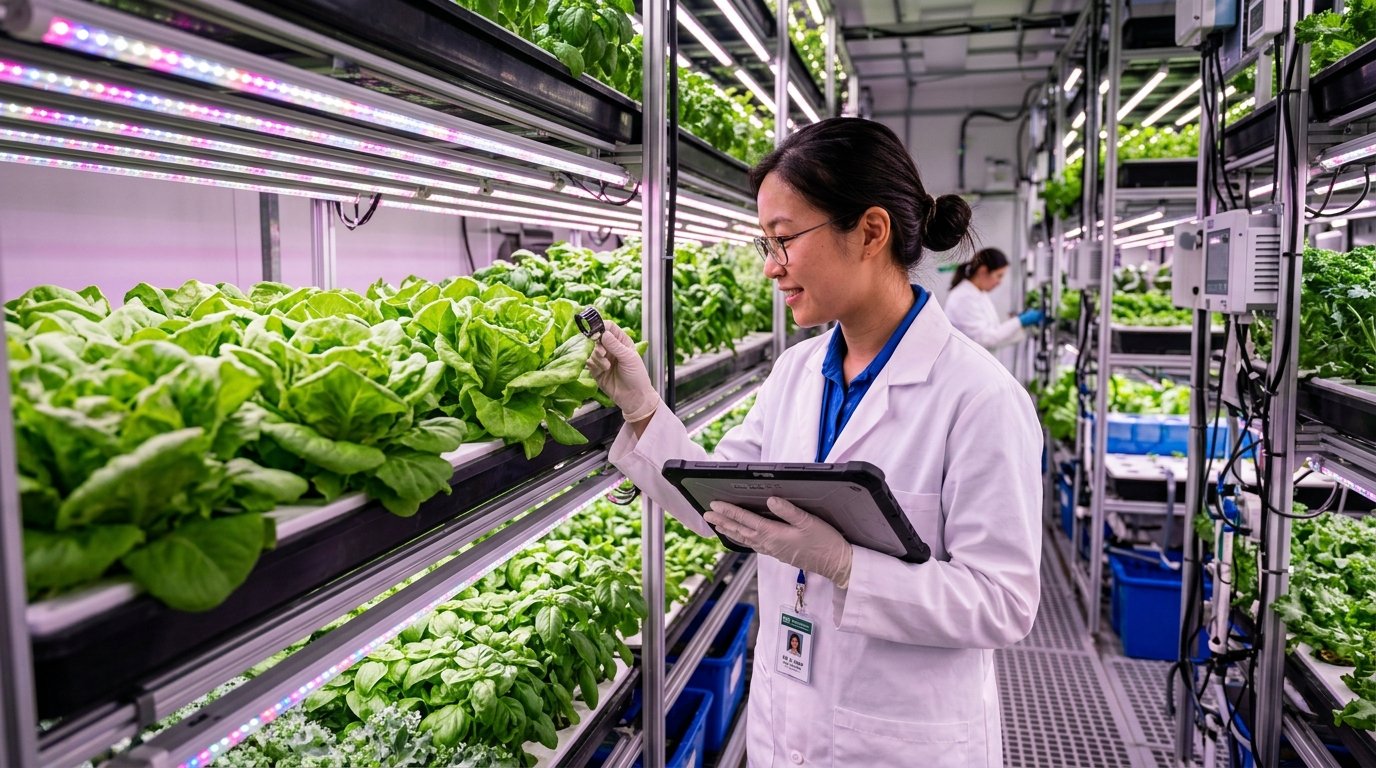
Crop Science
Seed selection, nutrient recipes, and cultivar trials to maximise flavour, nutrition, and shelf life for each crop.
Learn more →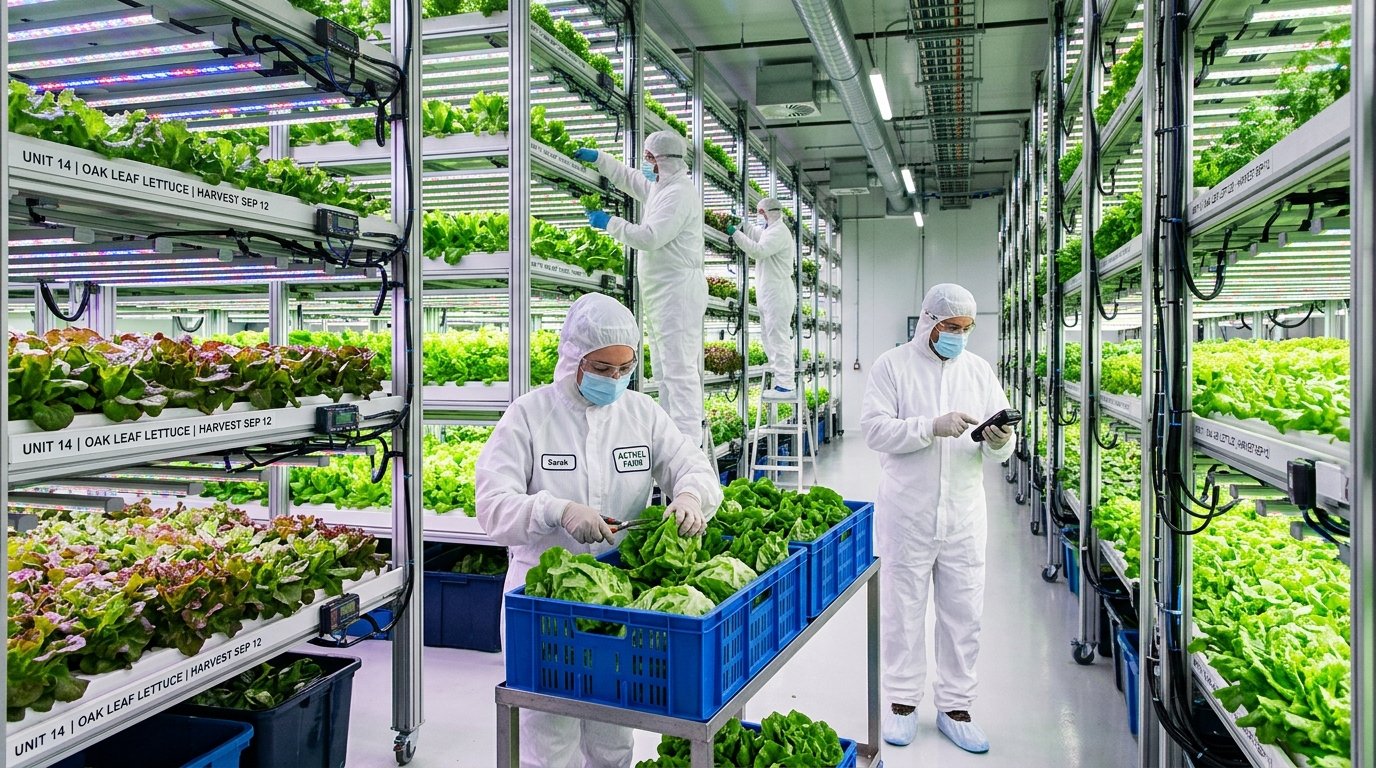
Farm Operations
Managed operations, staff training, compliance, and continuous improvement so your farm keeps performing.
Learn more →Measurable impact, every harvest
Four strategic phases from site evaluation to commercial scale
Our project methodology takes your facility from initial spatial planning to a fully operating, AI-optimized indoor vertical farm.
Feasibility & ROI Modeling
We evaluate spatial geometry, utility infrastructure, local energy tariffs, and market demand to project precise unit economics and payback timelines before capital commitment.
Custom CEA Engineering
Facility layout, multi-tier racking, dynamic LED spectrums, closed-loop fertigation, and AI control software are engineered as one cohesive operating system.
Turnkey Build & Validation
Our team installs LED hardware, sensor networks, and robotic workflows, executing multi-point commissioning trials to validate climate and irrigation stability.
Yield Optimization & Operations
Whether operated directly by Annadhara or handed to your team, machine learning models continuously refine light, climate, and nutrient recipes every harvest cycle.
One platform, every layer of the farm
Annadhara connects the physical farm and the intelligence layer, so growers can see every zone clearly and act before small changes affect crop quality.
- 01Sensor mesh
Tracks light, temperature, humidity, CO₂, pH, and EC across every growing zone.
- 02Lighting recipes
Programmable LEDs adjust intensity and timing by cultivar and growth stage.
- 03Closed-loop nutrition
Hydroponic delivery recirculates water and nutrients with controlled dosing.
- 04Robotic workflows
Automation supports seeding, transplanting, movement, inspection, and harvest.
- 05Yield intelligence
Machine-learning models forecast output and recommend recipe improvements.


Growing more with measurably less
Annadhara's indoor vertical farms reduce waste at the source: water is recirculated, crops grow in stacked layers, and runoff is designed out of the system.
Closed-loop water use
Nutrient-rich water is filtered and reused instead of draining away after each irrigation cycle.
Cleaner growing environment
Controlled indoor production avoids soil degradation, pesticide drift, and fertiliser leaching into nearby water bodies.
Shorter supply chains
Farms can operate close to cities, helping produce reach customers faster with less cold-chain waste.
What partners say about working with us
Annadhara took our underused warehouse and turned it into a productive farm within months. The AI climate control alone paid for itself in energy savings.
The AI yield forecasting models are remarkably accurate. We plan our retail orders a full week ahead with complete confidence now.
Their team handled everything from design to daily operations. We just buy the produce. It is the cleanest supply agreement we have.
Frequently asked questions
Clear answers for teams planning an Annadhara indoor farm, from crop choice and setup cost to operations after launch.
Leafy greens, herbs, and microgreens are the strongest fit for most indoor farms. Strawberries, tomatoes, peppers, and some vine crops can also work when the facility design, energy cost, and market price support the business case.
Cost depends on the building, crop mix, growing area, automation level, climate system, and target output. Annadhara starts with a feasibility model so you can review capex, opex, yield assumptions, and payback before committing to construction.
Both models are available. We can run the farm as a managed operation, build and hand it over to your trained team, or support a hybrid model with remote monitoring, crop recipes, and periodic performance reviews.
Closed-loop hydroponic systems commonly reduce water use by about 90 to 95% compared with field-grown equivalents because irrigation water is captured, filtered, and reused instead of draining into soil.
The produce is grown in a clean, controlled environment without routine pesticides or herbicides. Organic certification depends on local rules and certifying bodies, so we avoid claiming organic status unless the farm has completed the required certification process.
A warehouse, industrial unit, rooftop structure, or purpose-built facility can work if it has suitable power, water, drainage, floor loading, hygiene access, and climate-control potential. We confirm these requirements during the site assessment.
A full facility usually takes several months from feasibility to first harvest, depending on site readiness, scale, equipment lead times, and approvals. Smaller pilot farms or retrofits can move faster.
Yes. Sensor data, climate conditions, irrigation status, alerts, and production trends can be monitored through the control platform, with operators receiving clear actions when a zone needs attention.
Ready to grow the future of food?
Whether you have a site, a crop idea, or just a question, our team will help you model the possibilities and plan the next step.
Start a conversation