Plan the work
Turn orders, crop stages, capacity, and harvest windows into an executable shift plan.

A farm is a daily discipline. We run it for you, train your team to run it, or both — backed by the data and playbooks that keep performance climbing.
Commissioning is the start, not the finish. A vertical farm earns its returns through reliable daily execution: crop plans that match demand, disciplined climate checks, clean handling, and a team that knows what good looks like.
Turn orders, crop stages, capacity, and harvest windows into an executable shift plan.
Give every operator clear routines, ownership, and a fast path to escalate exceptions.
Use quality, yield, resource, and labour signals to keep the farm moving forward.
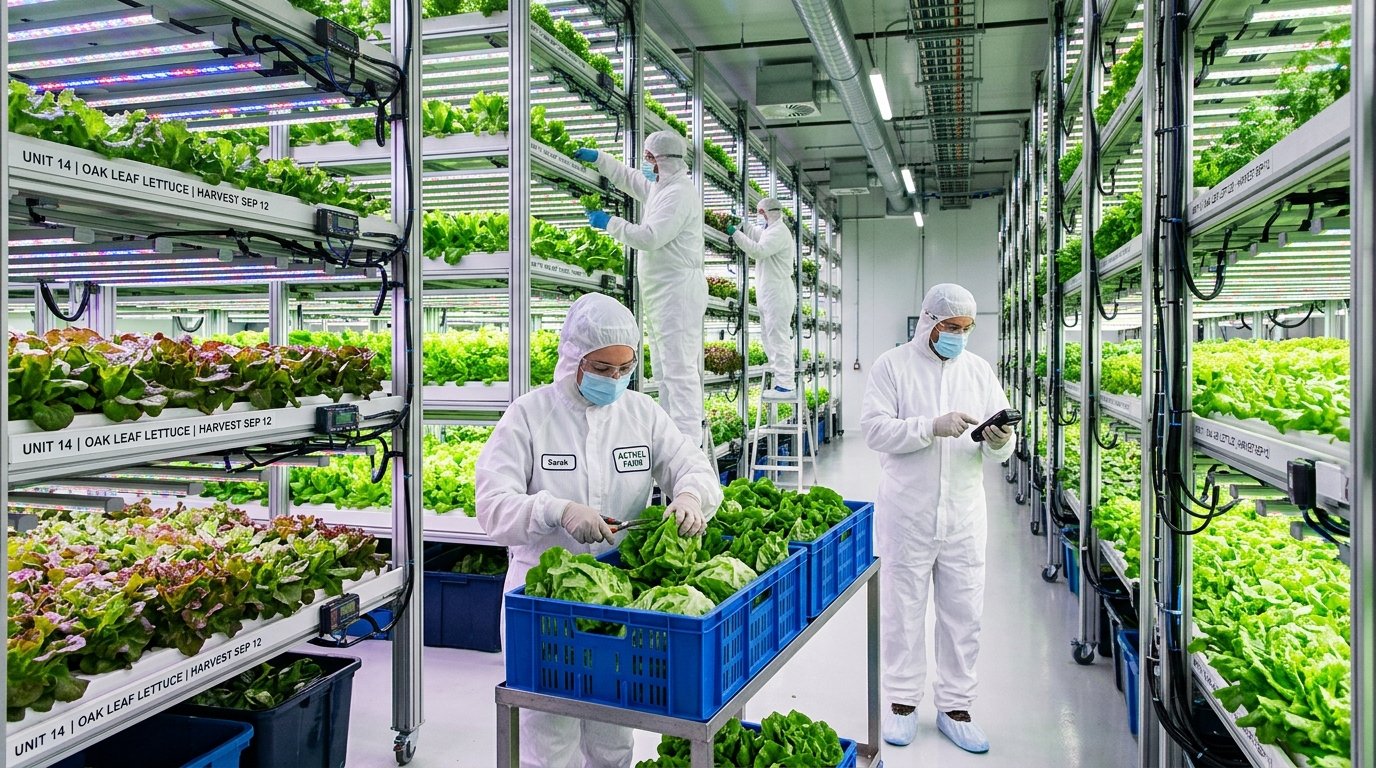
We connect the practical work on the farm floor to the planning, records, and performance review that make quality repeatable.
 Crop calendar
Schedule crop work against orders, capacity, labour, and readiness, not a static calendar.
 Hands-on coaching
Build job-ready routines for propagation, crop care, harvest, hygiene, and escalation.
 Traceable handling
Embed safe, traceable handling into daily work from crop inspection through pack-out.
 Audit workflow
Keep SOPs, checks, corrective actions, and evidence inside the workflow, not in a last-minute scramble.
 Live performance
Make yield, quality, resource use, and cost visible enough for the next shift to act on.
 Recipe review
Turn trial results, deviations, and operator feedback into stronger standards for the next cycle.
We run the farm day to day, making the standard visible in the shift plan, quality checks, and operational review.
We commission the farm, train your operators, and leave behind a working operating system with structured support.

Great performance should not live in one person’s head. We turn the operating system into practical, supervised routines a new team can learn on the floor.
Crop handling, hygiene, safety, and platform fundamentals are introduced in context.
Operators perform the daily rhythm with guided checks and immediate feedback.
Supervisors learn planning, performance analysis, and how to lead the next improvement.
Food safety and quality systems are most useful when the proof is created while the work is happening. We design the checks, records, and escalation paths into everyday routines.
That gives operators a simpler job, supervisors a clearer view, and commercial partners confidence that the farm can show how every crop was handled.
Repeatable standards for hygiene, crop care, harvest, pack-out, and exception handling.
Checks, lot records, and corrective actions are captured close to the task they support.
Managers can find patterns, address gaps, and keep the system ready for customer or regulatory review.

See the few signals that explain what is changing on the farm and what should happen next.
Review harvest volume, waste, grade distribution, and crop observations by cultivar and cycle.
Track energy, water, and nutrient use against the crop plan so variance becomes visible early.
Connect operating activity to cost per kilogram, revenue, and margin with clear variance commentary.
Practical answers for teams deciding how much operational support their farm needs.
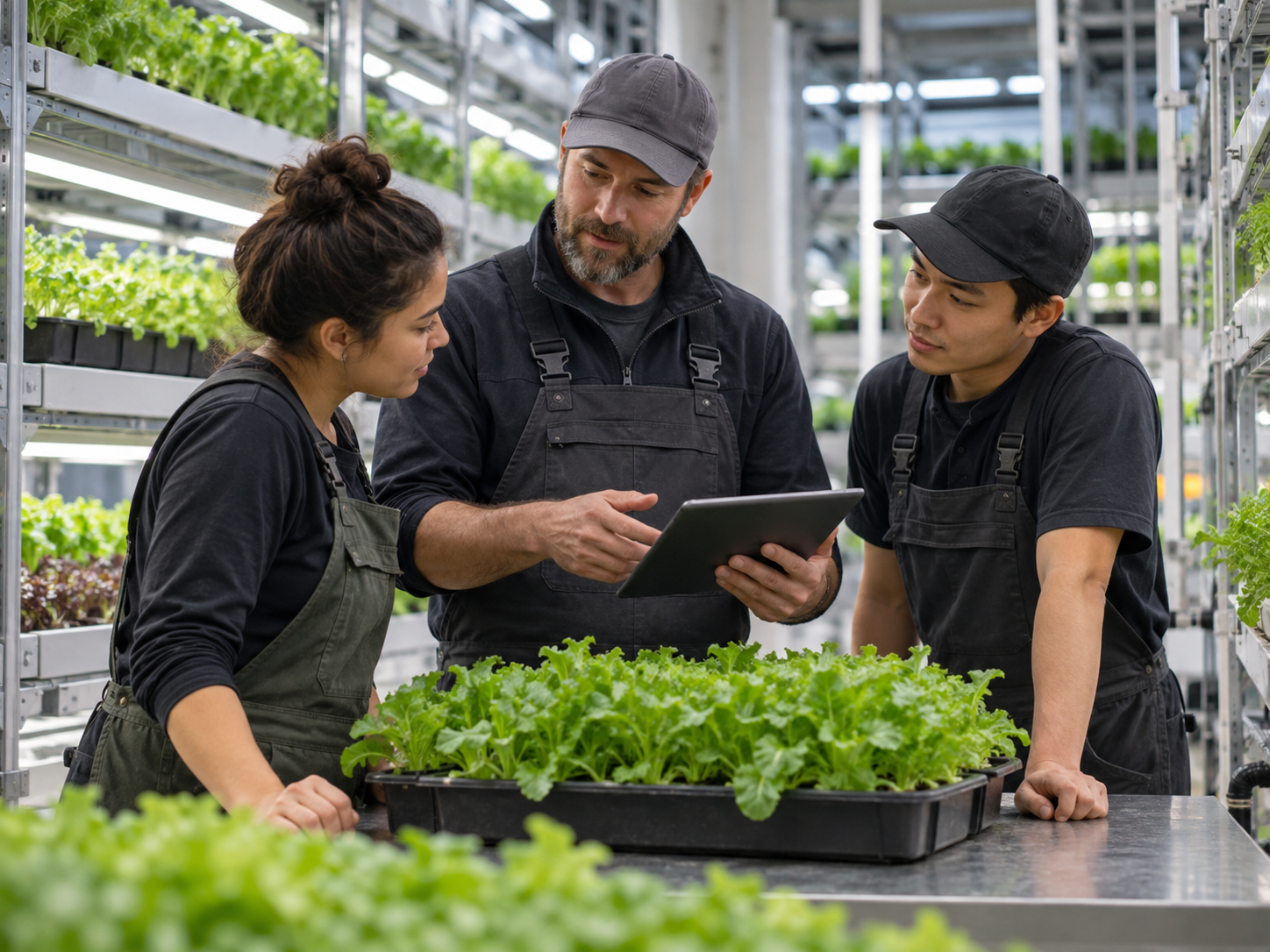
Yes. A managed start can establish the operating standard while your team builds confidence. A handover plan can then transfer routines, records, and day-to-day ownership in a measured way.
We align the crop plan, roles, key routines, safety requirements, and reporting cadence. Early reviews focus on stabilising the daily rhythm before optimising individual performance indicators.
We look at crop outcome, quality, labour, resource use, and the quality of the operating record together. The relevant measures are set around the farm, crop mix, and commercial model.
Operators work from clear SOPs for hygiene, harvest, handling, and traceability. The checks and records are designed to happen alongside the task, giving supervisors evidence without a separate paperwork sprint.
Training is role-based. Operators learn safe and consistent execution, while supervisors add production planning, performance review, escalation, and team leadership to their programme.
Connected monitoring and scheduled support can cover much of the operating model. Staffing, travel, local regulations, and critical-response requirements are assessed during service scoping.
Build a farm operating system your team can execute, measure, and improve.
Discuss operations