 Seed to tray
Automated seeding
Precision seeders place individual seeds into substrate plugs at high speed with verified placement.

Robots that seed, transplant, monitor, and harvest — running twenty-four hours a day with a consistency no manual team can match.
Seeding, transplanting, tray movement, crop scanning, and harvest routing can absorb large amounts of skilled labour. Annadhara automates those repeatable tasks so farm teams can focus on quality, crop science, maintenance, and exceptions.
Precision stations handle trays consistently while reducing manual handling.
Vision systems and sensors identify crop status, tray location, and readiness.
Robots move ripe crops toward harvest and pack-out with traceable records.
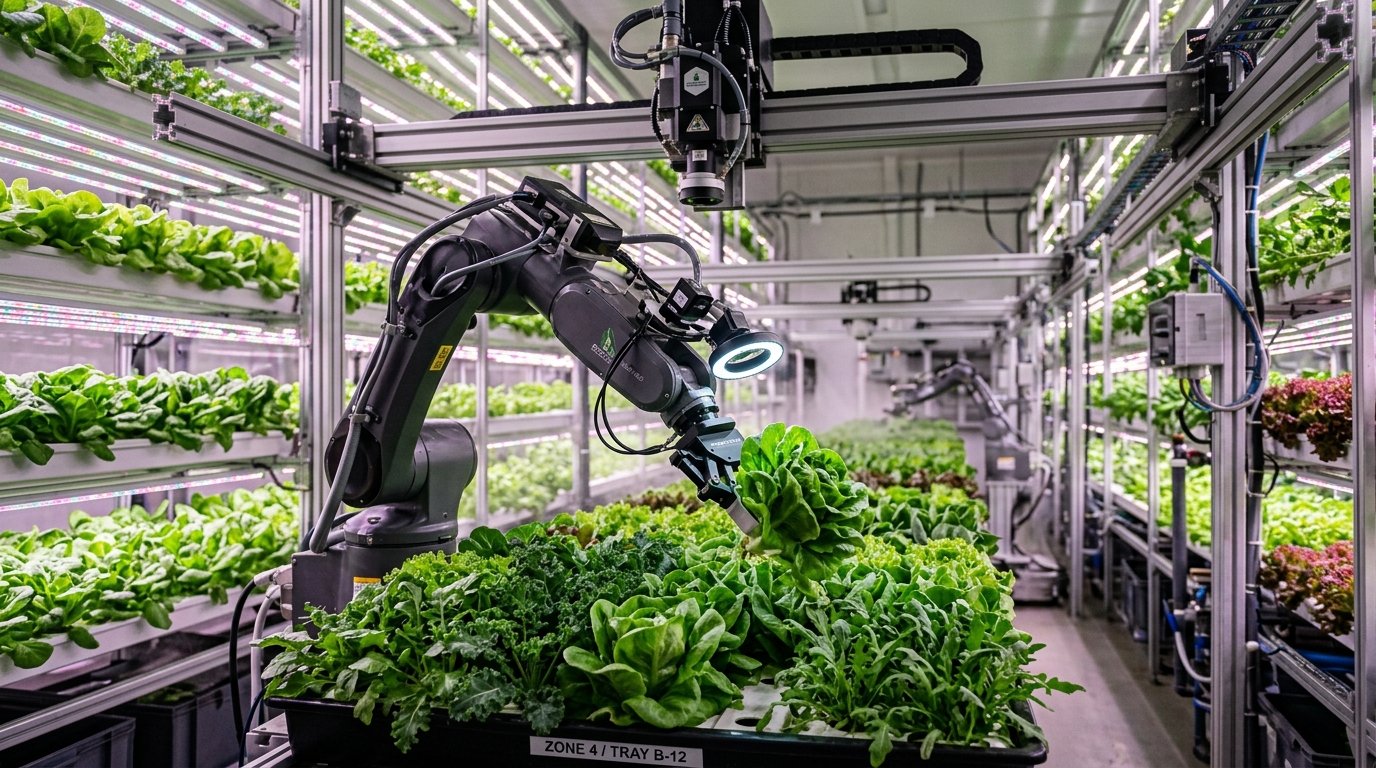 Seed to tray
Precision seeders place individual seeds into substrate plugs at high speed with verified placement.
 Gentle handling
Robotic arms move seedlings from propagation to grow trays without root damage or human handling.
 Tray movement
Conveyors and shuttles transport trays between zones, routing each to the right environment.
Vision-guided harvestComputer-vision-guided pickers identify mature produce and harvest at the optimal moment.
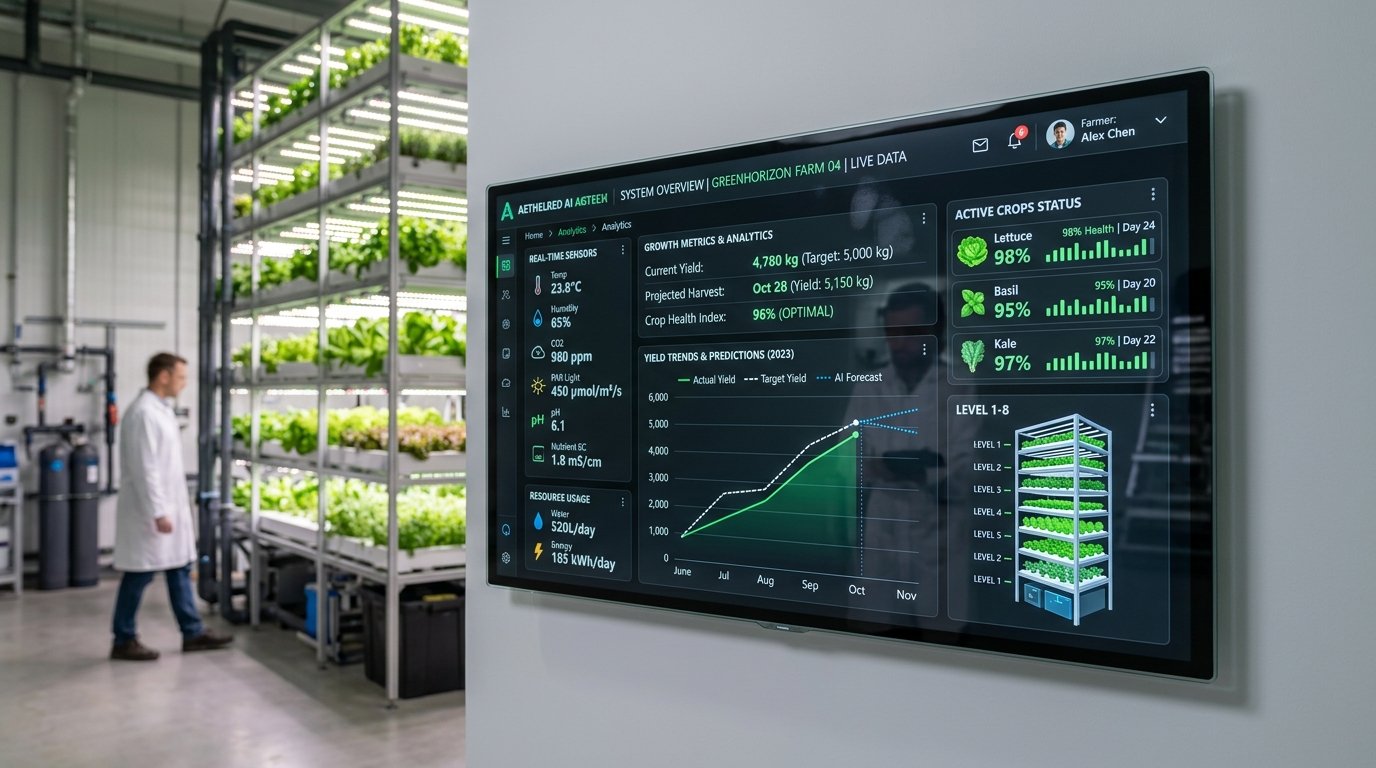 Live monitoring
Autonomous cameras and sensors patrol aisles to spot issues before they spread.
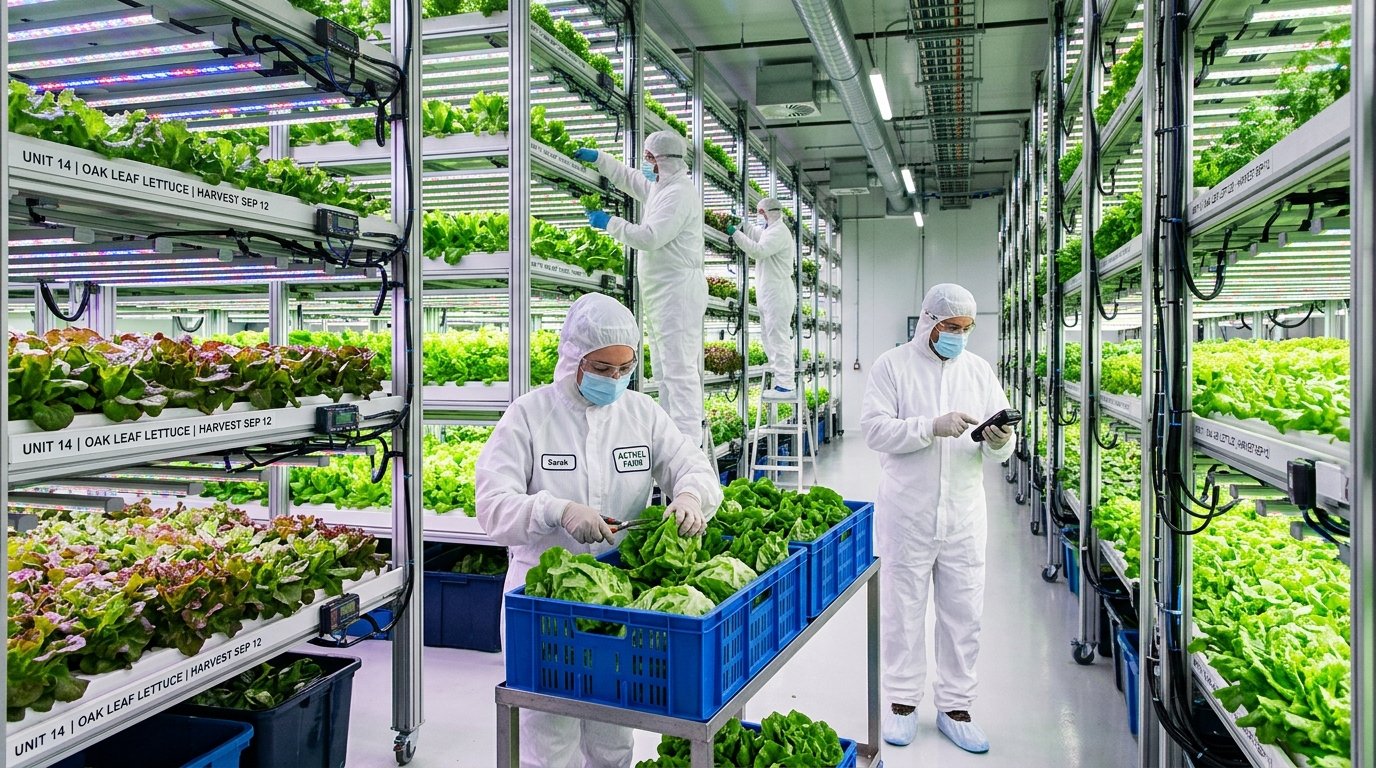 Traceable pack-out
Weighing, sorting, and packing stations that prepare produce for dispatch with full traceability.

Annadhara's control platform turns crop status, tray location, environmental readings, and order demand into coordinated work for every automated station.
Climate sensors and cameras report plant health, location, and maturity.
The platform prioritises tasks using crop readiness and delivery demand.
Robots receive traceable instructions for movement, harvest, and pack-out.
ProductivityAutomated stations take on repeatable tray and harvest work so teams can focus on quality, maintenance, and exceptions.
Gentle handlingRepeatable movement and defined crop recipes help protect produce quality through every cycle.
Live decisionsLive crop status and demand signals help teams plan harvesting and pack-out around delivery needs.
TraceabilityTray movements and harvest actions can be recorded from propagation through packing and dispatch.
At the harvest station, cameras inspect each tray and combine visible crop condition with the farm's live growing data. That gives the system a clearer signal for whether to pick, hold, or send a tray for review.
Review crop appearance, size, and maturity signals at the point of harvest.
Apply the crop recipe and current demand to prioritise the right trays.
Log the harvest decision and route each tray into the next pack-out step.
We begin with the workflow that has the clearest operational value, then use what we learn to connect additional stations without disrupting the farm's day-to-day output.
Review crop flow, labour-intensive tasks, facility constraints, and delivery commitments.
Commission one priority station and tune it alongside the existing farm workflow.
Use pilot results to plan connected stations, training, maintenance, and broader rollout.
Automation works best when it fits the crop, facility, people, and delivery model already in place. These are the questions we address first.
No. Automation is most useful for repetitive handling and movement. Farm teams remain central to crop oversight, maintenance, quality checks, and exception handling.
Often, yes. A site review identifies which tasks can be phased in first and what facility changes, interfaces, or safeguards are required.
High-volume, repeatable tasks with clear inputs and outputs are typically the strongest starting point, such as seeding, tray movement, crop inspection, harvesting, or pack-out.
Robot cells can be designed with controlled access, light curtains, emergency stops, and operating procedures that pause equipment when people enter a protected zone.
Maintenance plans can combine condition monitoring, remote diagnostics, spare-parts planning, and on-site support so the farm has a clear response path.
We start with the crop mix, target throughput, operating hours, facility layout, utilities, current workflow, and delivery requirements.
Find out which tasks in your farm are best suited to robotics and what the return looks like.
Request an automation study