 Harvest outlook
Yield forecasting
Turns live crop-stage, climate, and harvest data into a rolling outlook for volume and timing.

The intelligence layer that turns sensor data into better harvests — forecasting yield, catching disease early, and tuning the environment to each crop's needs.
Annadhara's machine-learning layer brings together climate readings, crop observations, recipe settings, and harvest results to help operators make better decisions.
Connect environmental conditions, plant development, and production records in one operating view.
Compare crop recipes with observed outcomes to identify useful patterns over time.
Surface practical adjustments for the team to review across climate, lighting, and harvest planning.
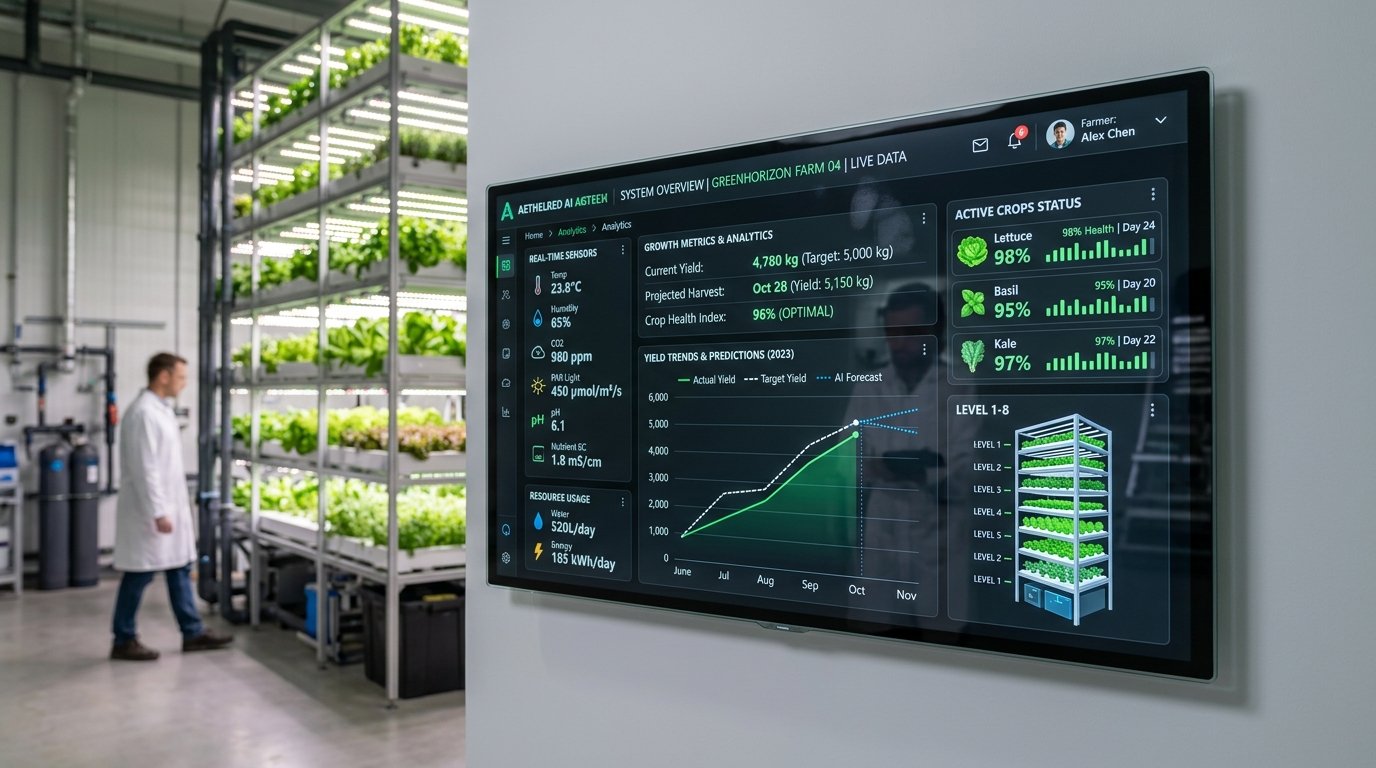
Every model is tied to a practical operating decision, from planning the harvest to checking the health of a single zone.
Harvest outlookTurns live crop-stage, climate, and harvest data into a rolling outlook for volume and timing.
 Crop inspection
Combines crop images with site history to surface early signs of stress for a grower to review.
 Climate signals
Tests likely crop and energy outcomes to propose setpoint changes the team can approve.
 Fertigation
Relates EC, pH, and uptake patterns to crop performance so recipes can be adjusted deliberately.
 Equipment signals
Flags readings that diverge from a zone's usual pattern, directing operators to investigate early.
 Crop trials
Compares outcomes by cultivar and growth stage to refine validated recipes one cycle at a time.

Sensors, camera systems, and production records show what is happening in every zone. Models turn those signals into practical recommendations for the team to review.
When a change is made, the result becomes part of the next decision. Over time, every crop cycle builds a clearer picture of how each cultivar responds in this specific farm.

Yield forecasts bring crop stage, environmental history, and recent harvest records together into a rolling view of expected volume and timing.
Teams can use that view to line up harvesting, packing, and distribution around likely demand. Because growing conditions can change, the forecast is presented as a range so uncertainty remains visible before commitments are made.
A farm should know where its operational records live, who can access them, and how they can be exported. Those expectations should be set before systems go live.
The project agreement should set out ownership of production records and the process for exporting them.
Roles, retention periods, and permitted uses are defined so teams know how operational data is handled.
Specific data-processing, security, and retention terms are confirmed in the project agreement.

We begin with the data and decisions your team already uses, then phase models into daily operations with operators in control.
Review sensors, records, and operating questions to identify dependable starting inputs.
Test early forecasts and alerts against past and live crop cycles before they influence workflow.
Introduce recommendations in advisory mode, with clear ownership and agreed safeguards.

Practical answers before you connect a first data source or introduce a new model into the farm.

No. A smaller farm can benefit when it has recurring crop cycles and reliable operational data. We focus first on the decisions where a forecast or early alert can make a practical difference.
Useful starting points include climate and irrigation logs, crop-stage records, images, and harvest weights. During the audit, we identify what is available and where new data would add value.
Models begin in advisory mode. They explain a recommendation for an operator to review; any later automation is introduced only with agreed safety limits and approval rules.
We compare outputs with historic records and parallel live observations, then monitor performance against agreed measures such as timing, quality, resource use, or forecast accuracy.
Often, yes. The assessment maps available sensors, control interfaces, and export formats so the implementation fits the systems already operating on the farm.
If your farm already produces sensor data, we can turn it into forecasts and recommendations within weeks.
Request an ML assessment