 Spectrum control
Light intensity & spectrum
Programmable LEDs deliver the right photon flux and spectrum per cultivar and stage.

The microclimate is the farm. We engineer the sensors, air handling, lighting, and control software that hold that microclimate exactly where each crop grows best.
In a controlled-environment farm, the climate is whatever you make it. The challenge is holding that climate steady across every zone, every tier, and every hour — despite the heat from lights, the transpiration from plants, and the changing demands of each growth stage.
Our environmental-controls layer integrates sensors, HVAC, lighting, and CO₂ systems into one feedback loop that maintains setpoints to a fraction of a degree.

Air handling, lighting, and crop sensors work as one system.
Spectrum controlProgrammable LEDs deliver the right photon flux and spectrum per cultivar and stage.
 Thermal stability
Air handling holds air temperature within half a degree of setpoint across all zones.
 Moisture balance
Dehumidification manages the transpiration load to prevent condensation and disease.
 CO₂ dosing
Carbon dioxide is maintained at optimal levels to boost photosynthesis and growth rate.
 Air circulation
Directional air movement strengthens stems and removes the humid boundary layer at the leaf.
 Root-zone monitoring
Nutrient solution temperature, oxygenation, and EC are held within tight tolerances.

Environmental readings are captured where the plants grow.
A dense mesh of calibrated sensors sits at the heart of every control loop. Temperature, humidity, light, CO₂, pH, and electrical conductivity are sampled continuously and streamed to the control platform.
Sensor redundancy means a single failure does not create a blind spot; the system cross-checks readings and flags drift automatically.
Every minute, the platform compares live sensor readings with crop-specific setpoints and selects the smallest adjustment each actuator needs.
PID control keeps the farm steady instead of chasing every temporary change. Setpoints follow the growth stage and time of day, while the learning layer can flag recurring patterns for the next crop cycle.
Read climate, crop, and root-zone conditions where the plants grow.
Compare each reading with the current recipe and calculate the corrective action.
Guide the chiller, humidifier, dimmer, or CO₂ valve back toward setpoint.
Plants stress on swings, not just extremes. A steady climate often outperforms a "better" average with high variance.

Environmental data and equipment actions stay connected in real time.
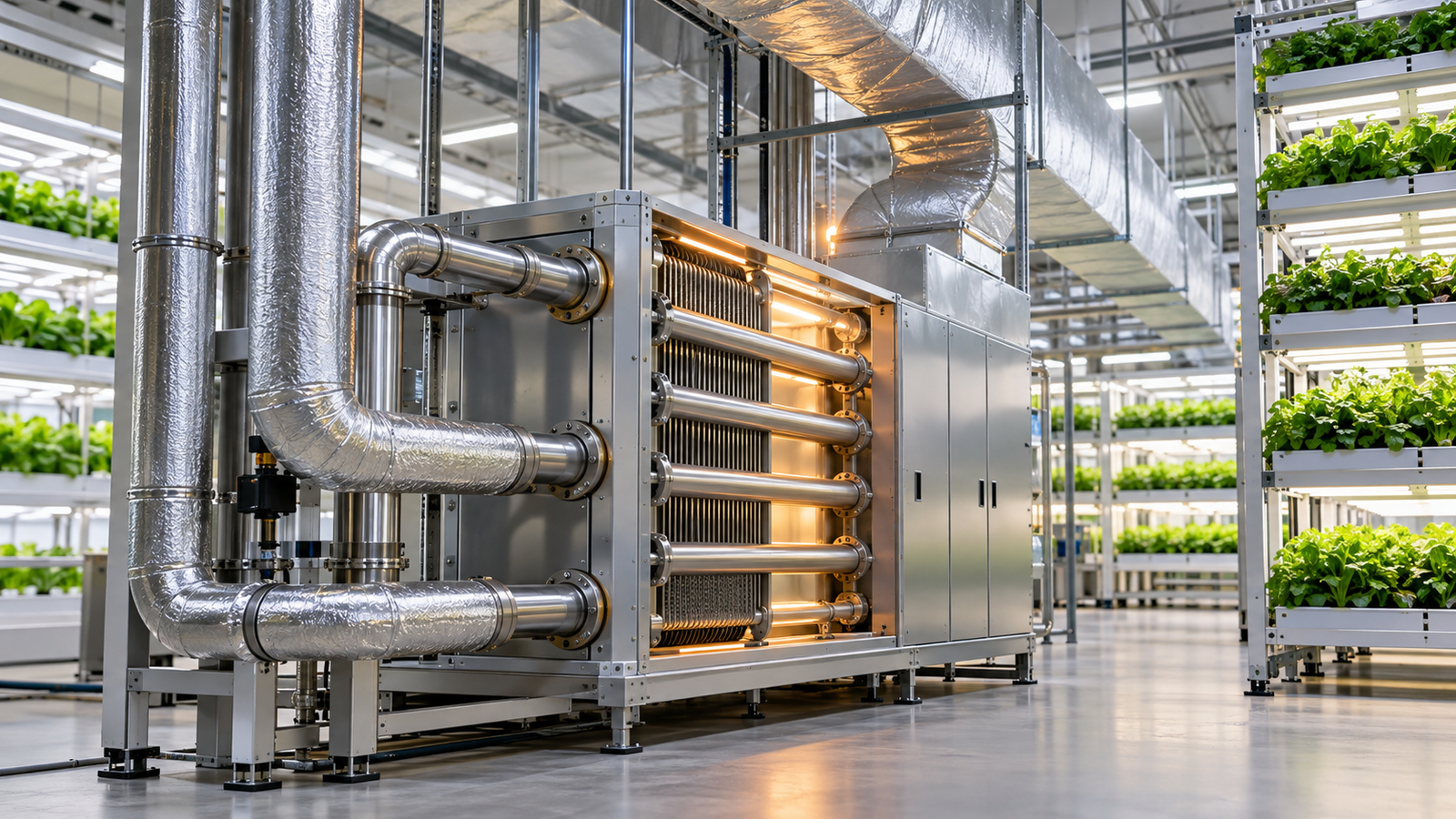
Recover heat from lighting and equipment for dehumidification and zone heating instead of generating it again.
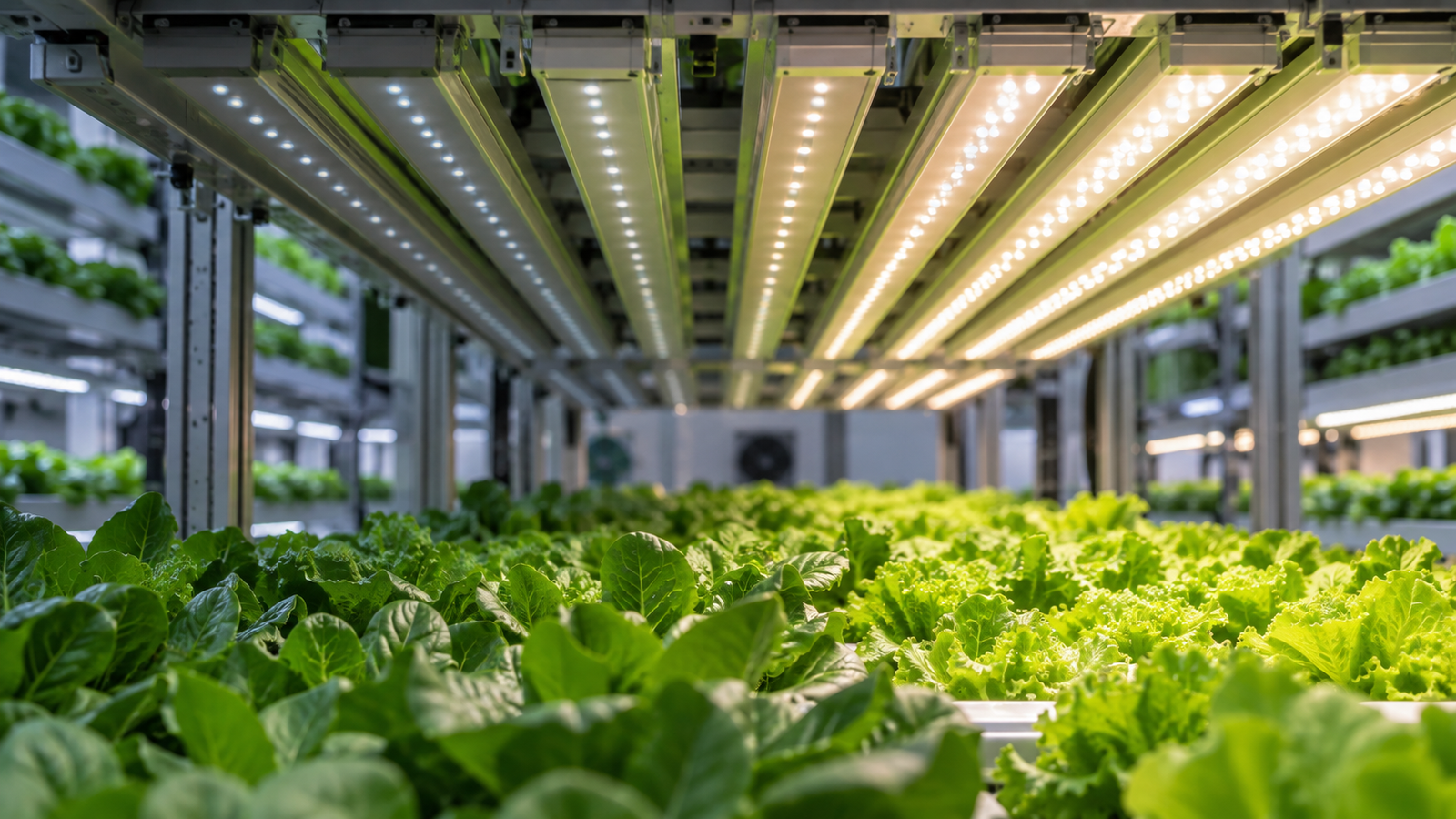
Match light output to the daily photoperiod, lowering peak demand and extending fixture life without compromising crop targets.
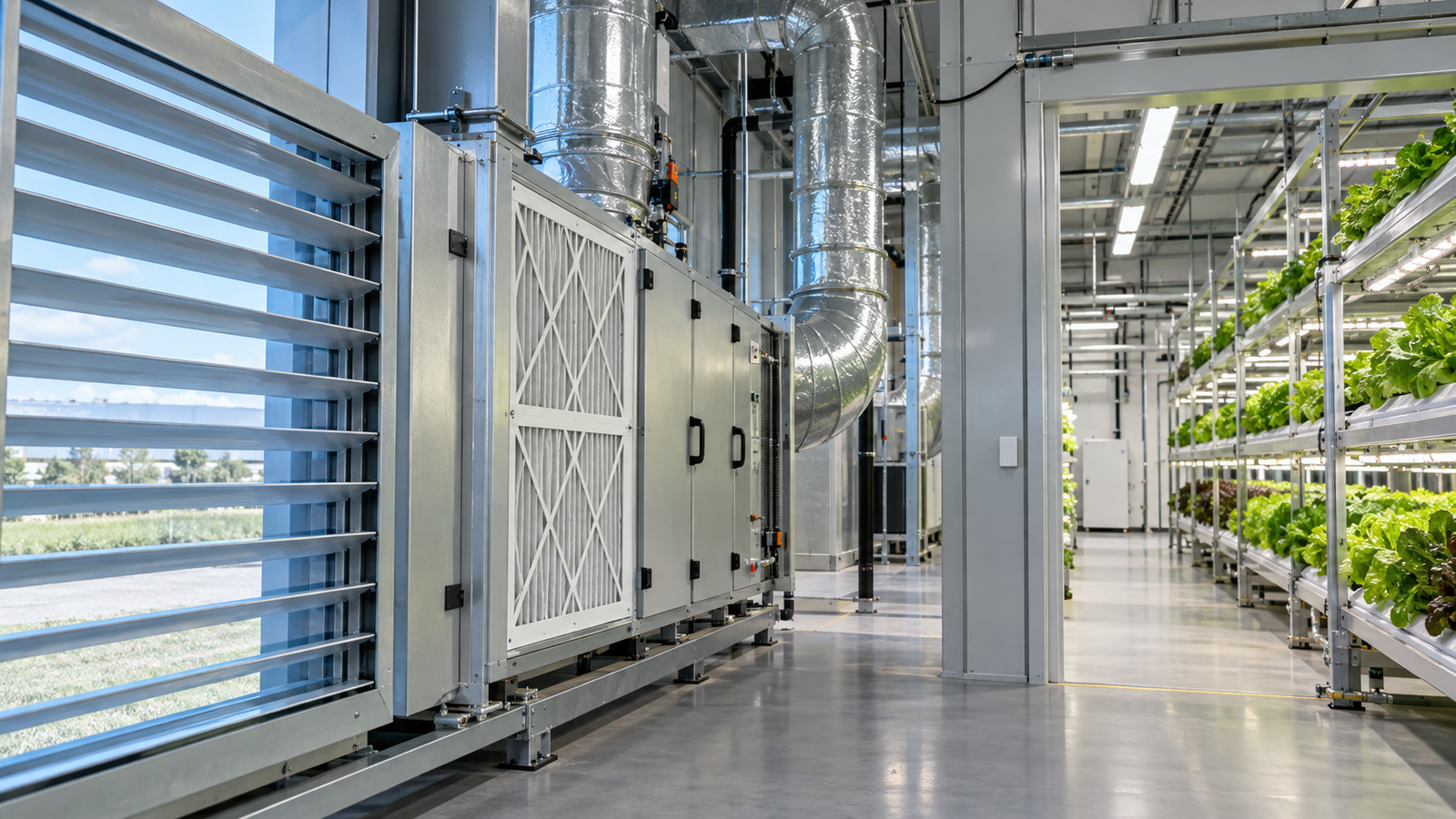
Use cool outdoor conditions through economiser modes before relying on mechanical chilling.
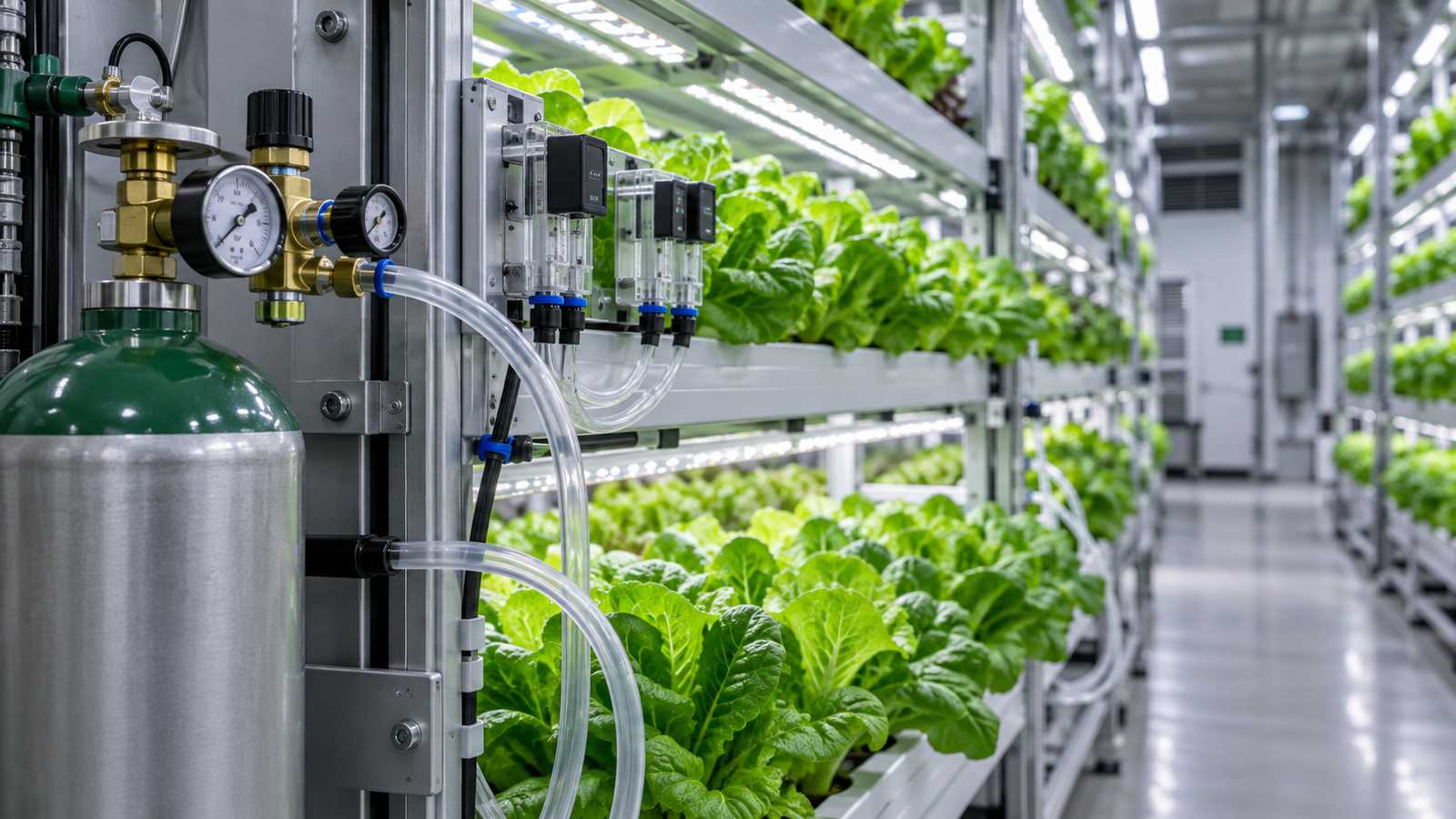
Deliver enrichment only when crop activity and occupancy call for it, rather than running the system continuously.
A control failure in a dense farm can lose a crop in hours. Our systems fail safe: sensors cross-validate, actuators default to safe states on communication loss, and critical loops have hardware backups independent of the software platform.
Operators receive instant alerts on any out-of-tolerance condition, and a full audit trail records every setpoint change and actuation.

Independent backup hardware protects every critical climate loop.
Practical answers on the systems that keep crop conditions stable, efficient, and safe.

Often, yes. During a site audit we review installed equipment, available control interfaces, and safety interlocks, then recommend whether to integrate, add gateways, or stage an upgrade.
The useful level of precision depends on the crop, growth stage, facility envelope, and economics. We begin with crop-specific tolerance ranges, then tune temperature, humidity, light, CO2, and root-zone control only where the crop benefits.
Yes. Authorised operators can view live readings, alarms, and control history remotely. Access levels are set by role, and operational changes are recorded for traceability.
A typical system monitors temperature, relative humidity, light intensity, CO2, airflow, and root-zone signals such as pH, EC, solution temperature, and dissolved oxygen. The final sensor set is sized around the crop and process.
The system raises an alarm when a signal drifts or goes offline, keeps essential equipment in defined safe states, and can retain local fallback control for critical loops while operators investigate.
Controls coordinate lighting schedules, heat recovery, dehumidification, fresh-air economising, and CO2 dosing so equipment runs only when crop conditions call for it. Savings depend on the equipment, climate, and operating schedule.
Whether you need a new system or an upgrade to existing controls, we'll engineer the right loop for your farm.
Discuss your climate needs